Life happens, and your next car should not be out of reach because of past credit setbacks. Our second chance auto financing in Osage OK is built to help real people in communities like Pawhuska, Skiatook, Hominy, Fairfax, and Barnsdall move forward with sensible used car loan options. We work with a network of lenders that consider more than a score, focusing on steady income, residency, and your overall ability to pay. Transparent terms, easy-to-understand paperwork, and flexible down payment possibilities aim to make the process straightforward. Whether you are rebuilding credit, establishing it for the first time, or returning after a life event, this page explains how approvals work, which documents to gather, and how to compare payments by vehicle price and term. You can also review local market insights and buying guidance tailored to Osage County so you can choose a vehicle and payment plan that supports your budget and long term goals.
This resource outlines second chance auto financing designed for Osage County buyers seeking a reliable used vehicle with realistic payments. You will find steps to qualification, typical lender criteria, and tips to strengthen your profile. Compare options, understand interest rates, and learn how on time payments can help rebuild credit over time.
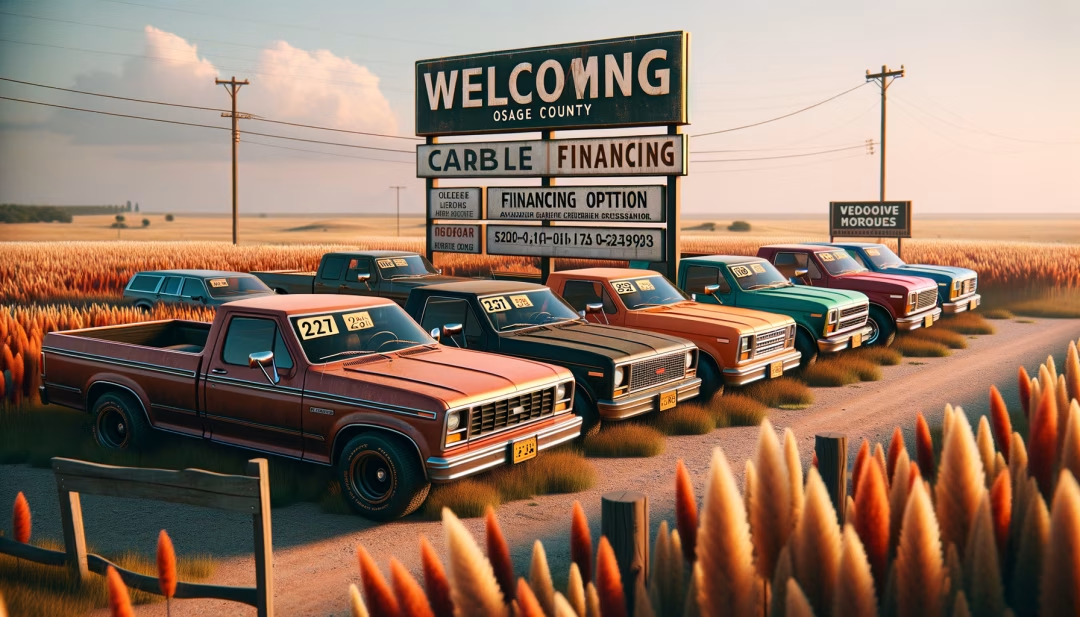
Second chance auto financing is a lending path for shoppers who may have limited credit history, past due accounts, collections, or prior bankruptcies. Instead of using one strict credit cutoff, lenders look at multiple signals, including income stability, time on the job, housing history, and down payment. For Osage County residents, this approach can open the door to a dependable used car and a monthly payment aligned with local budgets and commute needs.
This financing can fit many scenarios. First time buyers with thin credit files can establish positive payment history. Returning buyers can rebuild after medical bills, divorce, or temporary income loss. Independent workers and contractors with 1099 income can demonstrate stability with bank statements. Military families and essential workers who changed jobs recently can still qualify with verifiable income and proof of residency.
Most lenders follow a simple sequence. First, they review identification, income, and residence documents. Next, they estimate a comfort zone for monthly payment. Then they match vehicles that fit the budget while checking loan to value and mileage guidelines. After that, they finalize rate and term, prepare disclosures, and schedule funding and delivery. Throughout, transparency about payment, fees, and optional protections helps you decide what is right for you.
Successful second chance financing starts with a clear payment target. A general guide is to keep your car payment near 10 to 15 percent of monthly take home pay, depending on other obligations. If fuel, insurance, and maintenance are added, the total car cost should usually remain under 20 percent. Matching the vehicle price and term to that guideline can help you remain comfortable and on time each month.
Rates for second chance auto loans are based on overall credit risk, not only a score. Lenders consider recent payment history, loan amount relative to vehicle value, age and mileage of the vehicle, and your down payment. Demonstrating stability and providing complete documentation can help earn more favorable terms. If a co buyer with stronger credit is available, some lenders allow a joint application to support approval and better pricing.
Buy here pay here stores typically keep loans in house and may offer very open approvals, but they commonly limit vehicle selection and can use weekly payments. Second chance financing with outside lenders often includes broader vehicle choices, biweekly or monthly payment plans, and regular reporting to major credit bureaus. Consistent, on time payments can then help build or rebuild credit history over time.
Accurate paperwork speeds decisions and reduces back and forth. Bring a valid driver license, pay stubs from the last 30 days or 60 to 90 days of bank statements if self employed, a recent utility bill or lease showing your address, and proof of insurance. If you have a trade in, a title or lien payoff details will also be needed.
If your profile is near the approval line, small improvements can make a difference. Pay down revolving balances to reduce utilization, correct any errors on your credit report, and verify that your bank statements show consistent deposits. Bringing a modest down payment or a trade with equity can also help reduce the amount financed, which can lead to a better fit within lender guidelines.
From school runs in Skiatook to highway commutes toward Tulsa, vehicle needs vary. Compact sedans can reduce fuel costs when daily miles are high. Small crossovers bring added ground clearance and cargo space for weekend trips to the lake or Tallgrass Prairie. Half ton trucks remain popular for ranch work and home projects. Matching your lifestyle to a reliable vehicle with known maintenance history keeps ownership costs predictable.
You can research pricing trends and availability in our region to set expectations before choosing a vehicle. Local insights help you understand normal price ranges by model year and mileage so you can compare offers with confidence.
Once a loan is active, on time payments are the most important factor for credit rebuilding. Setting up reminders or automatic payments can help. Keep a small emergency fund for tires, brakes, and routine services. If your budget improves, consider paying extra toward principal to reduce interest over the life of the loan. Communicate with your lender early if a hardship arises so they can explain available options.
Osage County shoppers benefit from localized market data and clear financing education. Browse inventory, read guides that explain terms in plain language, and compare prices in nearby counties. These resources can help you set a smart budget and choose a vehicle that fits your daily routes and seasonal needs.
Explore detailed guides and localized research to compare vehicles and financing paths across Oklahoma counties.